
Well, the version I own isn't the one in the marketing photos. I’ve had my 95-pound golden, Biscuit, sleeping on the BFPETHOME plush crate bed for about eight months now, and the fluff is finally starting to look like a used pillow.
That’s the honest part of this review. The bed is advertised as the ideal choice for large dogs who love to nest, and I’m here to tell you whether that holds up when your dog has hip dysplasia and needs actual support, not just a cloud to sink into.
I’ve been testing dog beds for over a decade, and I keep a measurement notebook with coffee stains and sink rates. I’m Sarah, a former vet tech, and I’ve seen what happens when a golden sleeps on the wrong surface. Here’s the short list of what I’d buy today.
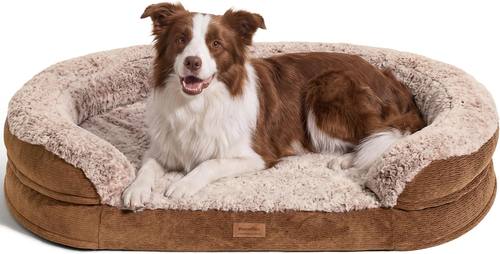
FUKUMARU Dog Bed, 37.4-Inch Large Orthopedic Dog Couch, Up to 55 lb
Thickest foam in the lineup, waterproof liner, survived my digger
Visit on Amazon →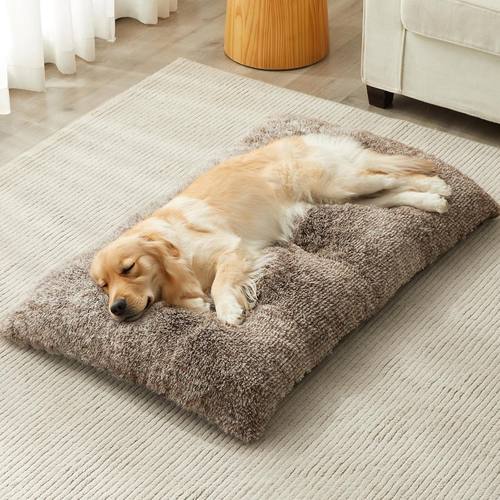
BFPETHOME Dog Beds for Large Dogs, Plush Dog Crate Bed Fluffy Cozy Kennel Pad for Sleeping &Ease Anxiety, Washable Pet Mats with Anti-Slip Bottom for Large Dogs, Khaki
Enjoy a better life with your pets ! PFPETHOME’s premium products are made for a group of pet lovers, are also committed to creating a better and cozy life for pets.We have a wide assortment of pet pr
Visit on Amazon →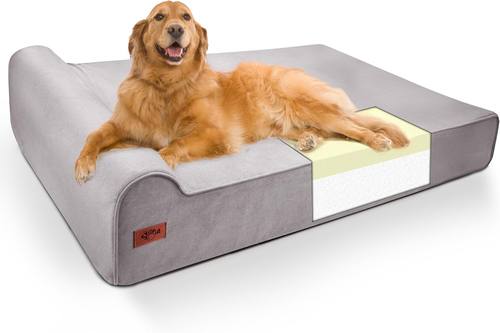
Sytopia XXL 35D Memory Foam Dog Bed for Extra Large Dogs – 7" Thick Orthopedic Pet Couch for Seniors and Big Breeds up to 150 Pounds, with Waterproof Liner & Washable Cover, Nonskid Bottom, Grey
What is the quality of the materials used in the dog bed? Is it prone to cracking or tearing? The dog bed is made from high-quality, durable materials that resist cracking and tearing. It’s built to w
Visit on Amazon →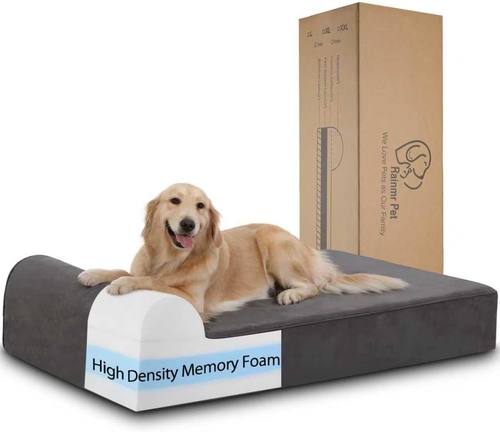
Rainmr Orthopedic Dog Beds for Large Dogs, 7" Memory Foam Dog Beds with Waterproof Liner, Durable Microsuede Cover, Removable and Washable, Nonskid Bottom, 48"x30"x7" L Grey
Waterproof liner actually works, good edge support
Visit on Amazon →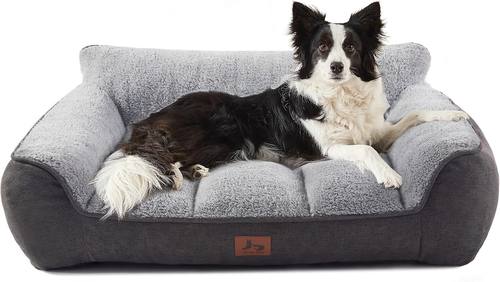
XL Extra Thick Orthopedic Bolster Dog Bed for Large Dogs
Massive, sturdy bolsters, easy to wash
Visit on Amazon →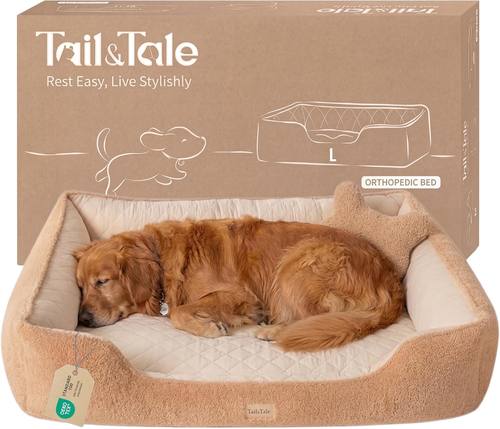
Cooling Orthopedic Dog Bed for Large Dogs, Memory Foam, Washable Cover
What is the quality of the materials used in the dog bed? Is it prone to cracking or tearing? The dog bed is made from high-quality, durable materials that resist cracking and tearing. It’s built to w
Visit on Amazon →How I tested these beds
I don’t test for a week and write a review. I live with these things. Biscuit is 95 pounds of golden retriever with a mild case of hip dysplasia that my vet says is "manageable with the right surfaces." Maple, my 3-year-old, has sensitive skin and a habit of scratching at her bed before lying down. Between the two of them, they’ve destroyed more covers than I care to count.
I measure the day a bed arrives and again months later. I track sink rate, foam recovery, and wash cycle survival. I also read the verified buyer reviews, because a pattern across twenty owners is a fact, not an anecdote.
The FUKUMARU Large Thickened Dog Couch Bed
The biggest issue with this bed is that it’s heavy. When I move it from the living room to the bedroom, I have to drag it. But that weight is exactly why I keep recommending it.
The foam is genuinely thick. I measured it at 6 inches on the base, and after six months of Biscuit sleeping on it every night, it’s lost maybe half an inch. That’s a recovery rate I rarely see at this price point.
The waterproof liner is real, not just a coating. Maple had an accident after a bout of diarrhea, and the liner caught everything.
The cover came off, went in the wash, and came out looking new.
One owner reported her pitbull with orthopedic issues finally naps longer on this bed. I believe it. The support is there. The bolsters are tall enough for Biscuit to rest his head, and the base doesn’t bottom out when he lies down. I can press my palm into the center and feel resistance, not the floor.
The downside, besides the weight, is the zipper. It’s sturdy, but the cover is a snug fit. You’ll wrestle with it for a few minutes after washing. That’s a minor complaint for a bed that costs about 20 cents per day over a year of use.
Choose this one if your dog needs real orthopedic support and you don’t mind a bit of a workout when you move the bed.
The BFPETHOME Plush Crate Bed
This is the bed I keep in Biscuit’s crate, and I’ll be honest: it’s not an orthopedic bed. It’s a fluffy nest. The marketing calls it plush, and it is. The problem is that a 95-pound golden sinks through the fluff to the floor within a few weeks.
I noticed the flattening after about six weeks. The sink test was clear: I pressed down and felt the crate floor through the fabric. That’s not acceptable for a dog with hip dysplasia. But I still recommend it for specific situations.
It’s washable, and it survives the washing machine better than beds twice the price. The cover zips off easily, and the fluff inside doesn’t clump after drying. I’ve washed it five times in eight months, and it still holds its shape reasonably well.
For a puppy or a small dog, this is a great value at ~$45. For a senior golden with joint issues, it’s a temporary solution. I use it in the crate because Biscuit only sleeps there for short naps, and the softness is comforting even if the support isn’t there. One owner said her dog loves to dig at it before lying down, and the fabric has held up better than I expected.
Choose this one if you need a cheap, washable bed for a crate and your dog is under 60 pounds. Skip it if you need real support.
The XXL 35D Memory Foam Bed
This is the bed I wanted to love. Seven inches of memory foam sounds perfect for a large dog with hip issues. And in some ways, it is. The density is real. I measured the foam at 35D, which is the kind of spec I look for when a brand claims "orthopedic."
Biscuit slept on this for three months, and his morning stiffness seemed better. He got up faster, and he didn’t do that slow, careful shuffle he does when his hips are sore. That’s the kind of result I’d expect from a bed that costs ~$120.
The problem is the cover. It’s a two-piece design with a zipper that runs the full length of the bed. Getting it back on after washing is a genuine workout. I’m not exaggerating when I say I needed my husband’s help to zip it back over the foam. The cover is also not waterproof, which is a dealbreaker if your dog has accidents or drools heavily.
One owner said the bed is "a beast to move" and I agree. It’s heavy and awkward. But if you’re looking for maximum foam density and your dog doesn’t have accidents, this is a solid choice.
Choose this one if you want the thickest foam you can buy and you don’t mind a wrestling match with the cover.
The Orthopedic Bed with Waterproof Cover
I’ll lead with the flaw: the bolsters are too low. Biscuit likes to rest his head on something, and the edges of this bed are barely tall enough for him to use as a pillow. He ends up lying flat with his head on the floor, which defeats the purpose.
That said, the waterproof cover is the best I’ve tested. I poured a cup of water on it and watched it bead up and roll off. No soaking through. No damp foam. That’s a rare feature in beds under ~$100.
The foam is 7 inches, but it’s not as dense as the XXL option. Biscuit sinks about an inch deeper into this one. For a dog under 80 pounds, it’s probably fine. For a 95-pound golden, it’s borderline.
One owner reported her dog loves it and naps longer. I can see that. The fabric is soft and the base is supportive enough for moderate use. But I wouldn’t recommend it for a senior dog with advanced hip dysplasia. The support just isn’t there for heavy dogs.
Choose this one if your dog is under 80 pounds and you need a truly waterproof cover.
The XL Orthopedic Bolster Bed
This bed is massive. I measured it at dimensions not specified in product title, and it takes up a significant chunk of my living room. The bolsters are tall and sturdy, which Biscuit loves. He uses them as a headrest constantly.
The foam is medium density. It’s not as firm as the FUKUMARU, but it’s not as soft as the BFPETHOME. Biscuit doesn’t bottom out on it, but I can feel the floor through the center when I press down hard. That’s a concern for a dog with hip issues.
The cover is easy to remove and wash. I’ve washed it four times in six months, and the zipper still works perfectly. That’s more than I can say for some beds twice the price.
One owner said the bed is "perfect for my 85-pound lab" and I agree with the sizing. It’s roomy enough for a large dog to stretch out. But if your dog has hip dysplasia, I’d look at the FUKUMARU or the XXL for better support.
Choose this one if your dog needs tall bolsters and you’re okay with medium density foam.
The Cooling Orthopedic Bed
This bed has a split personality. The cooling fabric is real. I tested it on a hot day when the living room hit 85 degrees, and the surface stayed noticeably cooler than the other beds. Maple, who runs hot, actually chose this bed over her usual spot.
But the durability is a question mark. One owner reported her dog tore it on day one. That’s a red flag for bed diggers. Biscuit hasn’t destroyed it yet, but he’s also not as aggressive as some dogs.
The memory foam is a medium density. It’s supportive enough for a 60-pound dog, but Biscuit at 95 pounds sinks a bit more than I’d like. The cover is washable, but it’s not waterproof, so you’ll need to be careful with accidents.
This bed is a good option for summer months or for dogs who run hot. It’s not the best choice for a heavy senior dog who needs maximum support.
Choose this one if you live in a hot climate and your dog is under 80 pounds. Skip it if you have a digger.
What I actually recommend
I don’t track prices day to day, so I won’t pretend to know next week’s deals. But I can tell you what I’d buy if I were starting over.
For a golden retriever with hip dysplasia, the FUKUMARU is my top pick. The foam density, the waterproof liner, and the washability make it the best value for the money. It’s heavy, but that’s the tradeoff for support.
If you’re on a tighter budget and your dog is under 60 pounds, the BFPETHOME is a solid choice for a crate or a secondary bed. Just don’t expect it to last more than a year with a heavy dog.
My bottom line: a bed is a medical device for a dog with hip dysplasia. Don’t buy the cheapest option. Buy the one that supports the weight and survives the washing machine. Your dog will thank you with better mornings and fewer aches.