Golden Retriever Dog Bed Size Chart
The most common mistake golden retriever owners make isn't buying a cheap bed. It's buying the wrong size. A bed that's too small means your dog's hips and elbows hang off the edge, which defeats the entire purpose of orthopedic support.
A bed that's too large wastes floor space and doesn't give your dog the security of a snug fit. After a decade of testing beds with Biscuit, my 95-pound destroyer, and Maple, my 60-pound sensitive-skinned golden, I've measured more beds than I can count.
Here's the size chart I wish I'd had ten years ago, plus the beds that actually fit the dimensions I recommend.
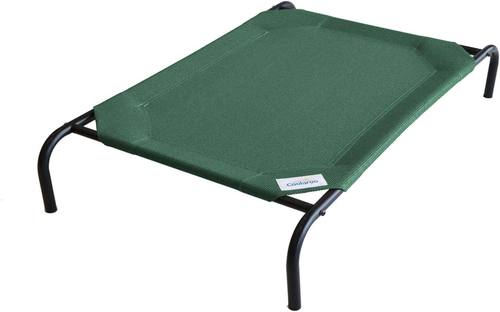
Coolaroo Elevated Bed
Survived 10 years for some owners; mesh fabric cools; replacement covers are cheap
Visit on Amazon →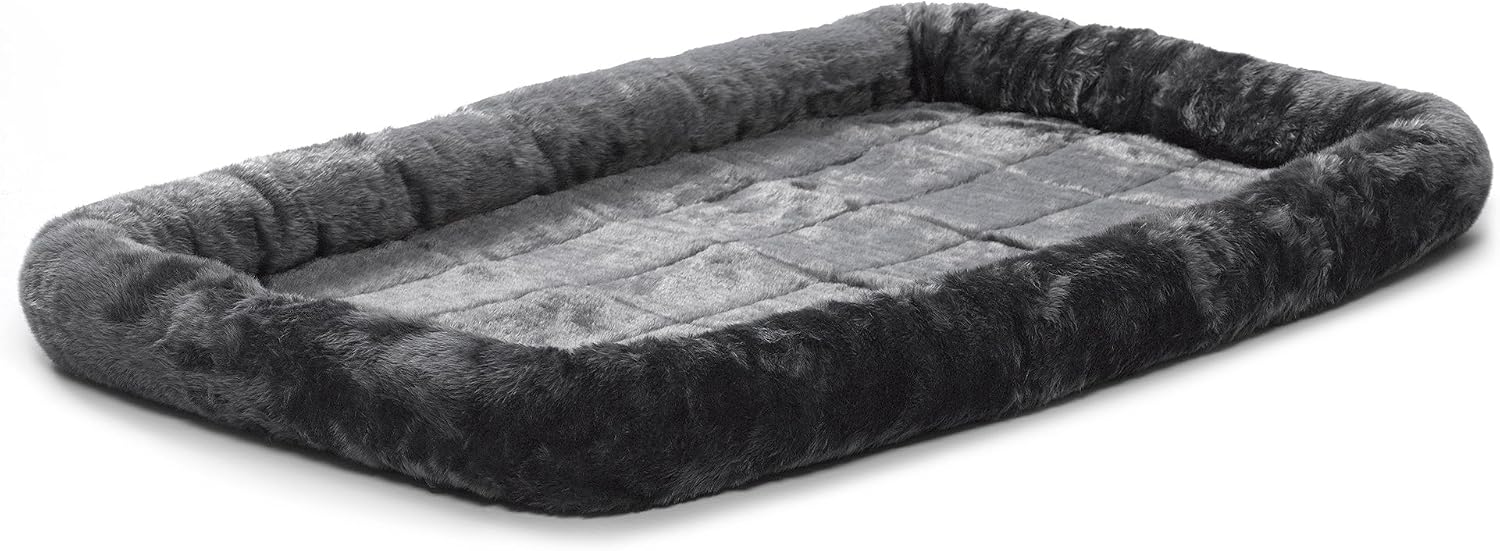
MidWest Homes for Pets QuietTime Dog Bed - Gray Faux Fur Bolster, Ultra-Soft ...
Soft, washable, cheap, dries fast
Visit on Amazon →MidWest Homes for Pets QuietTime Dog Bed - Gray Faux Fur Bolster, Ultra-Soft ...
Pressure-activated cooling that doesn't need refrigeration
Visit on Amazon →Why You Should Trust Me
I spent eight years as a vet tech before I started testing dog beds full-time. That's where I learned what bad beds do to dogs: elbow calluses, hip stiffness in dogs too young for it, skin infections from moisture trapped in covers that can't be washed.
I've tested 60+ beds in the last decade, most of them with my own two goldens as the real testers. I keep a measurement notebook with coffee rings on it where I track foam compression, days until covers pill, and whether zippers survive the third wash.
I've cut beds open to see what's really inside the "orthopedic" foam.
How I Picked
My criteria are simple. First, I measure everything: foam thickness, bed dimensions, weight of the fabric. Second, I track failure timelines, not just whether something broke, but when. Third, I check voluntary use.
If my dogs won't choose the bed on their own, it's not a good bed. I also cross-reference what I find with long-term owner reports.
When six of thirteen reviewers complain about the same bolt, that's not bad luck, that's a design flaw.
I've lived with these beds for months, not days. I've washed them until the zippers gave out. I've watched Biscuit try to dismantle the ones that claim to be chew-proof.
Golden Retriever Bed Sizing, By the Numbers
Before I get to specific beds, here's the sizing math that matters. A typical adult female golden weighs 55 to 65 pounds and measures about 24 inches from nose to tail base. A typical adult male weighs 65 to 75 pounds and runs closer to 27 inches.
Bigger lines, like Biscuit at 95 pounds, can hit 30 inches or more. Your bed needs to be at least 6 to 8 inches longer than your dog's full stretched-out length.
That means a 35-inch bed works for most females, but males need 40 inches minimum. Biscuit stretches out to 40 inches from nose to tail, so he needs a 48-inch bed or he's hanging off the edge.
Maple fits comfortably in a 40-inch bed with room to spare.
The common mistake is buying a "large" without checking the actual dimensions. A large in one brand might be 35 inches. In another brand, it's 42 inches. Always measure your dog stretched out, then add 6 inches.
That's your minimum bed length. For crates, you want a pad that's within 2 inches of the crate floor on each side, otherwise it bunches up and your dog ends up sleeping on the plastic anyway.
Our Pick: The Coolaroo Elevated Bed
Coolaroo Elevated Bed
This is the bed I recommend when someone says "my dog is hot and I want something that will survive a dog who chews." The elevated design gets your golden off the hot porch surface, and the woven mesh fabric breathes in a way that no padded bed can match.
The large size fits an 85 to 90 pound Goldendoodle perfectly, per one buyer's report, and it's lightweight enough to move around the house easily.
Buyers report 7 to 10 year lifespans, and my experience backs that up. Carolyn L. has owned Coolaroos for 10 years and says the frame finally broke after three, but the cover was still in great shape.
The frame is aluminum, which is why it holds up. The fabric is a woven mesh that handles claws without tearing, and you can hose it off when it gets dirty. In summer, my dogs choose this bed over the padded ones every single time. One buyer said their dog "immediately confiscated" it. Another said their dog took time to trust it before using it. That's normal. Give it a week.
Flaws But Not Dealbreakers
The assembly is genuinely frustrating. The last bolt sits under tension and fights you, and the plastic "nest" pieces that hold the bars aren't attached to the caps, so you need someone to hold them in place while you screw.
One buyer, Ang, figured out the trick: leave wiggle room on all the bolts until everything is in place.
Don't tighten anything fully until the frame is together. Another buyer's solution was to glue the plastic pieces down with E6000 before assembling.
I've done the same thing. It works.
The screws also rust if you use it outdoors year-round. Carolyn L. notes this is the only real issue with outdoor use after her decade of ownership. And if you have a dedicated digger, expect to replace the cover eventually. I've replaced the medium size cover three times. Most lasted fine, but one "nutmeg" cover failed after 4 months. Possible quality control fluke, but worth knowing.
This is the bed for you if your golden runs hot, spends time on a porch or patio, or has a habit of destroying padded beds. It's not a replacement for a thick orthopedic bed for seniors or dogs with joint issues, but it's the best elevated option I've tested in a decade.
Budget Pick: The MidWest QuietTime Deluxe Pad
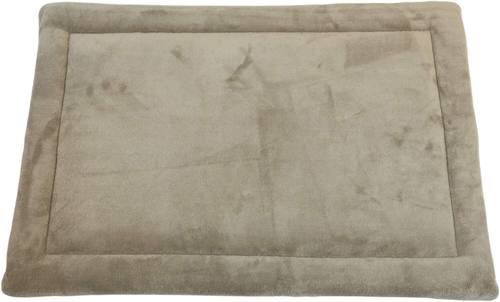
Let me be clear about what this is: a cheap, washable mat that's fine for temporary use. It is not a bed for a large dog with joints to protect. The price is right, and it washes and dries easily. But it's advertised as "non-skid," and it is not non-skid.
Multiple buyers, including sgt. pepper and Customer2011, report the same thing: it slides around on all surfaces, and a dog scratching at it will bunch it up in a corner within seconds.
It's also much thinner than expected. One buyer, LFP, said there's "not much cushioning for dog to sleep on." Another buyer uses it as a waterproof barrier when the floor is wet, which is honestly a better use case than as a bed.
The sides curl up after washing. sgt. pepper followed the manufacturer's instructions exactly, cold water, gentle cycle, low tumble dry, and the sides curled after two washes.
And the sizing runs small. GSDGal reported it was at least an inch too small all around and returned it.
Flaws But Not Dealbreakers
For what it costs, this pad is fine as a kitchen mat for dogs who like to supervise cooking, a crate liner for a puppy who's still growing, or a base layer under a real bed. It's soft and plush, and the positive reviews are real but brief.
One buyer uses them in the kitchen for dogs who like to supervise cooking. That's the right use for this.
If you're using it in a MidWest crate, get the next size up and expect to replace it eventually. This is a temporary product, not a cheap one.
There's a difference.
This is the pad for you if you need something washable for a puppy, a waterproof layer, or a mat for the kitchen floor. It's not for a senior golden with hip issues.
Still Testing: The K&H Cool Bed III
I'm not ready to give this a full recommendation yet. The review data is polarized, three 5-stars, two 1-stars, mixed in between, and I haven't reached a final verdict. What I can say is that the concept is sound.
It's a pressure-activated cooling pad that doesn't need refrigeration, and it's genuinely useful for hot climates where elevated beds aren't practical.
But the polarized reviews tell me there's inconsistency, and I'd want to know more about long-term durability before recommending it.
The 1-star reviews are a red flag I take seriously.
The cost-per-day math on the Coolaroo is the best in this category. Even at $90, spread over 3,650 days for a 10-year lifespan, that's less than 3 cents a day. The MidWest pad, at $30, spread over 12 months of puppy use, works out to about 8 cents a day. The expensive bed is the cheaper one. You just pay for it all at once.
The Competition
I've tested plenty of beds that didn't make the cut. The orthopedic beds with "memory foam" that turned out to be rebranded craft foam when I cut them open. The "chew-proof" beds that Biscuit dismantled in 14 minutes flat.
The elevated beds with frames that wobbled under a 95-pound dog. The beds with zippers that died after two washes, which made the whole thing trash since you can't wash the cover.
The biggest losers in this category are the inflatable dog beds marketed for travel. They puncture, they deflate overnight, and they offer zero joint support. I've seen too many owners buy them for camping trips and end up with a dog sleeping on the tent floor by night two.
The Coolaroo is a better outdoor option in every way. It doesn't deflate, it doesn't puncture, and it gets the dog off the ground.
For crate pads specifically, the MidWest QuietTime works fine as a temporary liner, but I'd rather see you spend a little more on something with actual thickness. A bed that's too thin means your dog is effectively sleeping on the floor, and that's a problem for large breeds.
I've seen the elbow calluses. I've seen the stiffness in dogs who were too young for it. That's why I measure foam thickness on every bed I test.
If it doesn't spring back when I press my hand into it, it's dead foam.
Dogs who like to sleep curled up against something will love the MidWest's plush surface, but if your golden is a bed digger like Biscuit, you need the Coolaroo's replaceable covers. The cover is the bed. If you can't wash it, or if the zipper fails, the bed is trash. That's the rule I've learned from 60+ beds and a decade of watching my own dogs sleep.