I'll be honest: I've spent more time pulling golden retriever fur off of dog beds than I have pulling it off of my own clothes. And I have two goldens. Biscuit is 95 pounds of loose undercoat that migrates onto every surface he touches.
Maple is 60 pounds and somehow leaves twice as much hair per square inch because her coat is finer. Together, they produce enough fur in a week to build a third dog.
Most "remove dog hair" guides assume you're dealing with a fitted sheet or a couch cushion. Dog beds are different. The fabric is often tougher, the seams are stress points, the foam underneath holds onto hair in ways a cotton sheet never could, and the whole thing gets covered in drool, dander, and the mysterious sticky stuff Biscuit produces when he's been outside.
You can't just vacuum and call it done. I've tried. I've also tried every tool, hack, and gadget that promises to pull fur off fabric.
Here's what actually works on a real dog bed after a real golden retriever has slept on it for six months.
The Short List
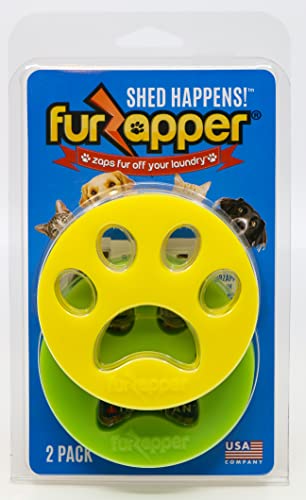
2 Pack FurZapper Pet Hair Remover for Laundry - Reusable Dog & Cat Hair Remover Tool As Seen on Shark Tank - Removes Pet Fur, Hair, Lint, Dander from Clothes & Laundry - One FurZapper Per Pet
Loosens hair in the wash so it actually leaves the fabric instead of redepositing
Visit on Amazon →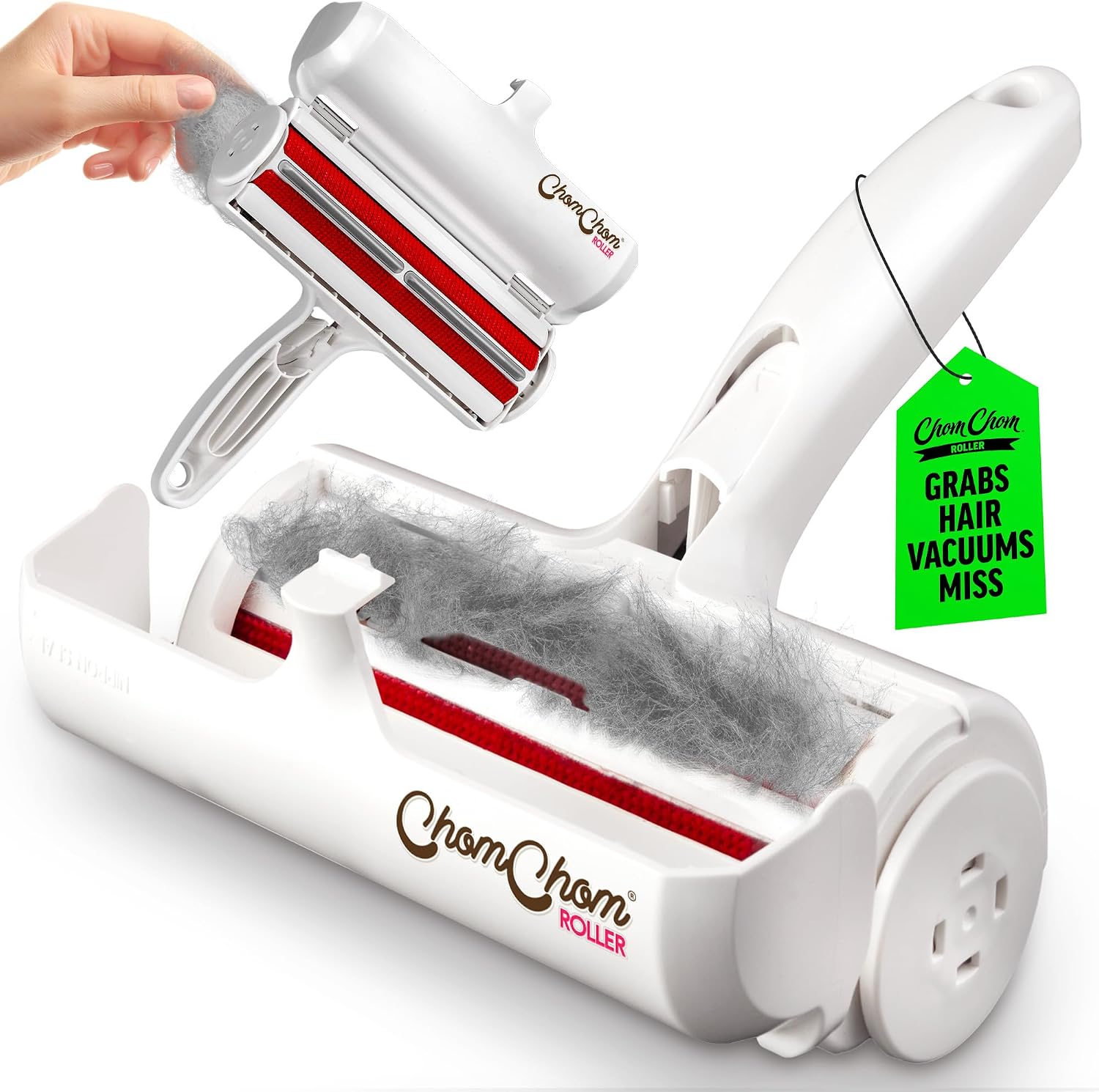
ChomChom Roller Pet Hair Remover – Original Size Reusable Lint Roller for Cat & Dog Hair on Furniture, Couch, Carpet, Car, Rugs & Bedding – Portable, Eco-Friendly (White)
Manual roller that picks up embedded hair from covers and cushions without adhesive refills
Visit on Amazon →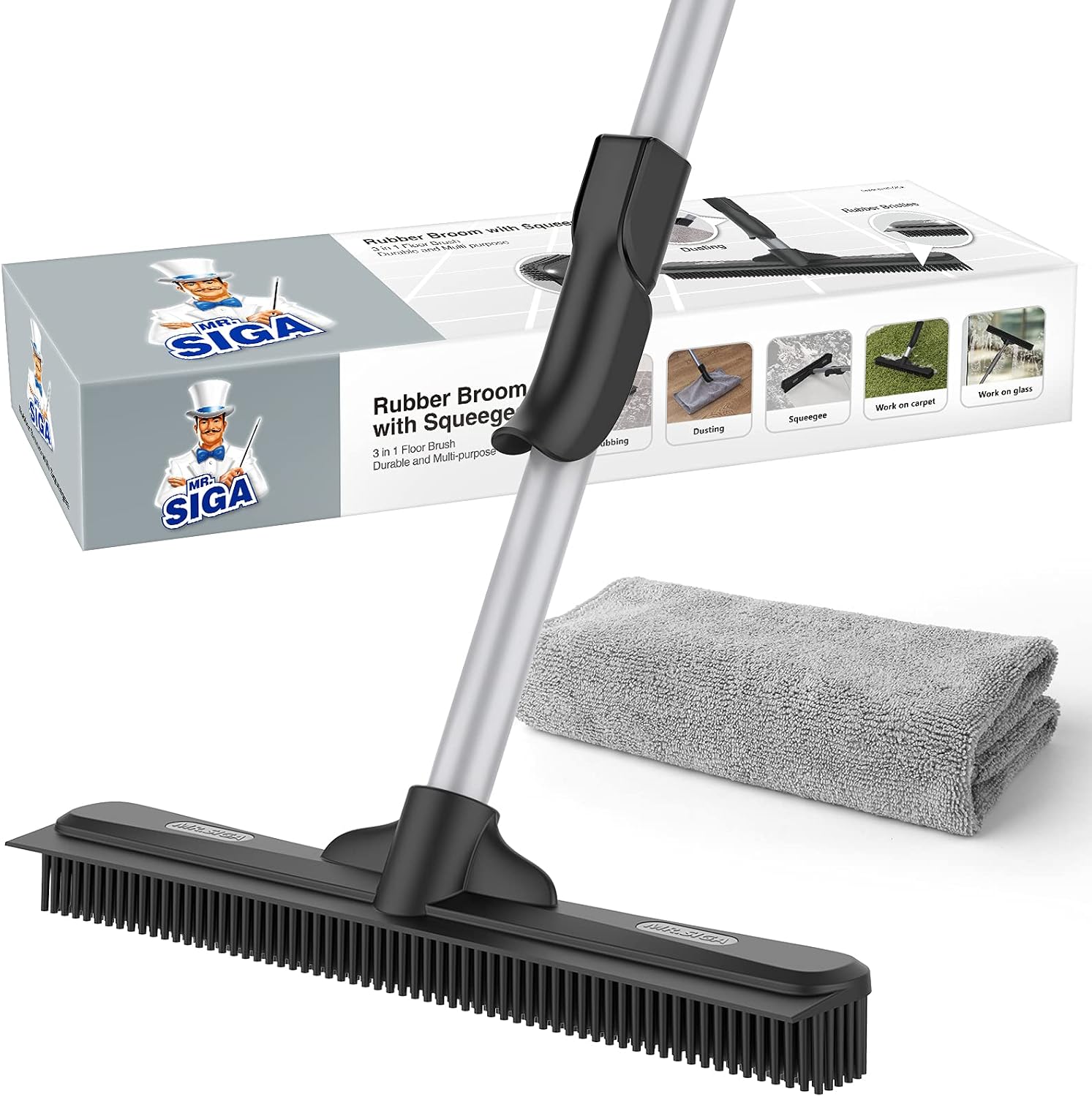
MR.SIGA Pet Hair Removal Rubber Broom with Built in Squeegee
The rubber edge grabs hair off beds, carpets, and rugs in long, satisfying rolls
Visit on Amazon →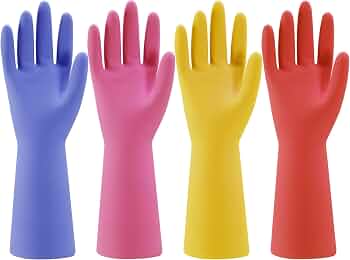
Rubber Kitchen Dishwashing Gloves - 4 Pairs Colorful Reusable Household Cleaning Gloves for Washing Dishes and Cleaning Tasks, Flexible Long-lasting and Non-Slip (Medium, Blue+Pink+Yellow+Red)
Cheap, immediate, oddly satisfying; works on covers the moment you notice the hair
Visit on Amazon →ChomChom Roller Pet Hair Remover – Original Size Reusable Lint Roller for Cat & Dog Hair on Furniture, Couch, Carpet, Car, Rugs & Bedding – Portable, Eco-Friendly (White)
Reduces static in the dryer so hair releases from fabric instead of clinging
Visit on Amazon →What Doesn't Work (And What I Tried First)
Before I get to the tools that do work, I want to name the ones that wasted my time. The lint roller is useless on a dog bed cover. It picks up a thin top layer and leaves the rest. Sticky tape wrapped around your hand works better, but you'll use half a roll before you're done and your hands will hate you.
Vacuuming alone gets the loose hair but leaves the embedded stuff, which is the hair that builds up over months and eventually becomes a felted second cover.
I've also watched friends buy expensive pet hair vacuums with motorized brush rolls and rubber fins. They're great on carpets and hard floors. On a quilted dog bed cover, they tangle. The brush roll stops. You cut hair off the roller for twenty minutes. That's not a solution.
What works is a combination approach: a tool that pulls the hair off the fabric first, and a laundry step that gets the rest out in the wash.
The FurZapper: My Honest Take After Six Months
The FurZapper is a soft, flexible rubber square with little nubs on it. You throw it in the washing machine with your dog bed cover (and any other laundry that's been covered in fur). The nubs grab the hair as the drum tumbles and loosen it from the fabric so it can be flushed out with the water. In theory. In practice, after six months of weekly washes, here's what I can tell you.
It works. Not perfectly, but measurably. Before the FurZapper, I'd pull a cover out of the wash and still see hair clinging to the inside seams. After the FurZapper, the hair is loose in the drum or caught in the filter. It is not 100% hair-free, but it is dramatically better than washing without it.
It's also reusable. I've run mine through 30-something cycles and they're still intact. The nubs haven't worn down. They haven't melted. They haven't torn. The only complaint is that you need to remember to put them in the wash, which is the kind of thing I forget roughly half the time. When I forget, the cover comes out with more hair on it. That's user error, not a product flaw.
If you have a golden retriever and you wash your dog bed covers weekly like I do, the FurZapper is the single best $15 you'll spend on the problem. It's not a substitute for brushing your dog. It's not a substitute for a cover. But it makes the laundry step actually work, which is the step where most of the hair comes off.
The ChomChom Roller: Best For The In-Between Days
The ChomChom is a handheld roller with a rubber blade inside. You roll it across the fabric and it picks up hair into a compartment that you empty when full. No adhesive. No refills. Just rubber and physics.
Mine lives on the back of the couch. I use it on the dog bed covers between washes when the hair starts to build up and Maple decides she's going to sleep on the bed instead of the rug. It takes about 30 seconds to clear a cover that has a day's worth of hair on it.
It doesn't get everything; the deep fabric pile still holds some, and the seams are basically unreachable with any roller.
But for a quick refresh, it's faster than anything else I've tried.
The catch: it's not a deep clean. If your bed cover has two weeks of accumulated fur on it, the ChomChom will fill up its chamber before you're halfway across the cover. That's when you go straight to the FurZapper and the washing machine. The two tools cover different jobs: ChomChom for daily maintenance, FurZapper for the weekly reset.
The Rubber Broom: Surprisingly Useful
I bought a rubber broom on a whim because I saw a video where someone swept a whole rug clean in thirty seconds. I was skeptical. Golden retriever hair laughs at brooms. But the rubber edge of these brooms actually grabs hair and rolls it into little balls that you can pick up and toss.
On flat-weave dog bed covers, it works well. On plush or quilted covers, it's less effective, but it still pulls the loose surface hair, which is more than most tools do. It also works on the area rug under the dog bed, which is where a lot of the hair ends up anyway. If you don't have one and you have hardwood or tile floors, this is the cheapest upgrade you can make.
I paid about $25 for mine. It's lightweight, the handle comes apart for storage, and the rubber edge hasn't worn down after a year. The only thing I don't love is that it's not as satisfying as a vacuum. There's no sound. You just push and the hair piles up. But the piles are real and they do come off the floor, so the satisfaction is delayed but accurate.
The Damp Rubber Glove: The Free Hack
Put on a rubber dishwashing glove. Wet it under the faucet. Wipe your hand across the dog bed cover. The hair comes off in sheets. This is not a joke. It's the cheapest, fastest, most oddly satisfying thing you can do for a cover that's between washes and starting to look fuzzy.
The downside is your hand cramps after a few minutes, and you're not going to do this on a king-size cover. But for a single dog bed cover, a couch cushion, or a small area rug, it works in under a minute. I keep a pair of cheap dish gloves in the laundry room specifically for this. When company is coming over and the dog bed looks like it's growing a fifth golden, this is what I reach for.
The Static Problem And Why The Dryer Matters
Here's something most guides miss: a lot of the hair that "won't come off" the dog bed cover is stuck there because of static. Synthetic fabrics, especially polyester and fleece covers, build up static in the dryer.
The hair clings because the fabric is electrically attracting it. A dryer sheet or a pet hair removal laundry additive reduces that static, which is why the hair falls off in the dryer instead of coming out still attached to the cover.
I've used both Bounce dryer sheets and a dedicated additive. Both work. The dedicated additive (I use Defurball, which is a small pellet you throw in the dryer) is a bit more effective on heavy loads, but for a single dog bed cover, a dryer sheet is fine. The point isn't the brand; the point is reducing static so the hair has a reason to let go.
If you air-dry your dog bed covers (which I do sometimes because some covers shrink in the dryer), you skip this step and you skip the benefit. Air-drying is fine for the fabric; it's just less effective for the hair.
What I Actually Do, Week To Week
Here's the routine I've settled into after a year of fighting golden retriever fur on dog beds.
Daily: nothing. I'm not going to lint-roll a bed cover every day. Maple sheds enough to repopulate the cover by evening.
Between washes: damp rubber glove on the cover if it starts to look fuzzy. Maybe a quick pass with the ChomChom if I'm sitting on the couch and the hair is bothering me.
Wash day: strip the cover off the bed. Throw the cover in the washing machine with two FurZappers. Wash on warm, gentle cycle. Move to the dryer with a dryer sheet or a Defurball pellet. Dry on low. Pull the cover out, give it a quick pass with the ChomChom if anything's left, put it back on the bed.
The bed itself (the foam insert) gets rotated and aired out monthly. Foam doesn't shed hair the way fabric does, but it holds onto dander and smell, and a monthly reset keeps it from becoming a biohazard. I don't wash the foam unless the cover failed and something got on it. Washing foam ruins foam.
When The Bed Cover Is Beyond Saving
Some covers are too far gone. The Coolaroo mesh cover washes clean because it's a flat weave; the fur comes off in the wash without much fight. The MidWest QuietTime pad, by contrast, is plush, and plush holds hair in a way that's structurally unfair. If you've got a plush cover that's been accumulating fur for six months, no tool is going to rescue it. Replace the cover.
That's the cost-per-day math again. A replacement Coolaroo cover is around $30 and lasts years. A replacement MidWest pad is around $25 and lasts a year. If the cover is furred beyond recovery, you're not saving money by trying to clean it; you're just transferring the hair to your washing machine and then to the next load of laundry.
The Honest Bottom Line
There is no single tool that removes all dog hair from all dog bed fabrics in one step. Anyone who tells you otherwise is selling something. What there is, is a sequence: pull the loose hair off first with a rubber glove or a roller, then run the cover through the wash with a FurZapper, then finish in the dryer with a static-reducing sheet.
That sequence gets 95% of the hair off a typical dog bed cover, and the remaining 5% is the deep-pile hair that wasn't going anywhere anyway.
The FurZapper is the single best purchase for the actual problem. The ChomChom is the best in-between tool. The rubber glove is the best free hack. Everything else is a supporting player.
If you've got a golden retriever, you've got fur. That's not a problem you solve; it's a condition you manage. The tools above make the management a lot less annoying.