How To Break In A New Dog Bed For A Golden Retriever
A new dog bed has one job: get your golden to actually sleep on it instead of the floor three feet away. I've watched Biscuit ignore a $200 orthopedic bed for two weeks, then claim a $20 crate mat as his throne.
I've also watched Maple refuse to touch a bed for six days, then pancake onto it like it was always hers.
Breaking in a bed is a real process, not a marketing afterthought. Here's what actually works, what doesn't, and which beds are worth the effort.
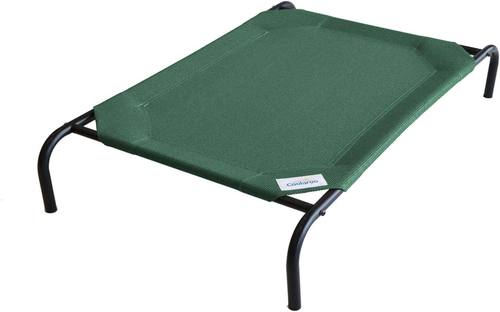
Coolaroo Elevated Bed
Survived 10 years for one owner; dogs choose it in summer; replacement covers are cheap
Visit on Amazon →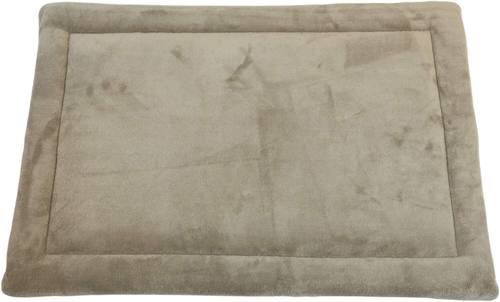
MidWest Homes for Pets Medium QuietTime Taupe Micro Terry Pet Bed, Ultra-Soft...
MidWest Homes for Pets is glad to offer our ultra-soft, plush & durable pet beds, dog beds or dog crate mats in a taupe micro terry fabric. These dog beds are made for toy breeds up to 6 pounds and th
Visit on Amazon →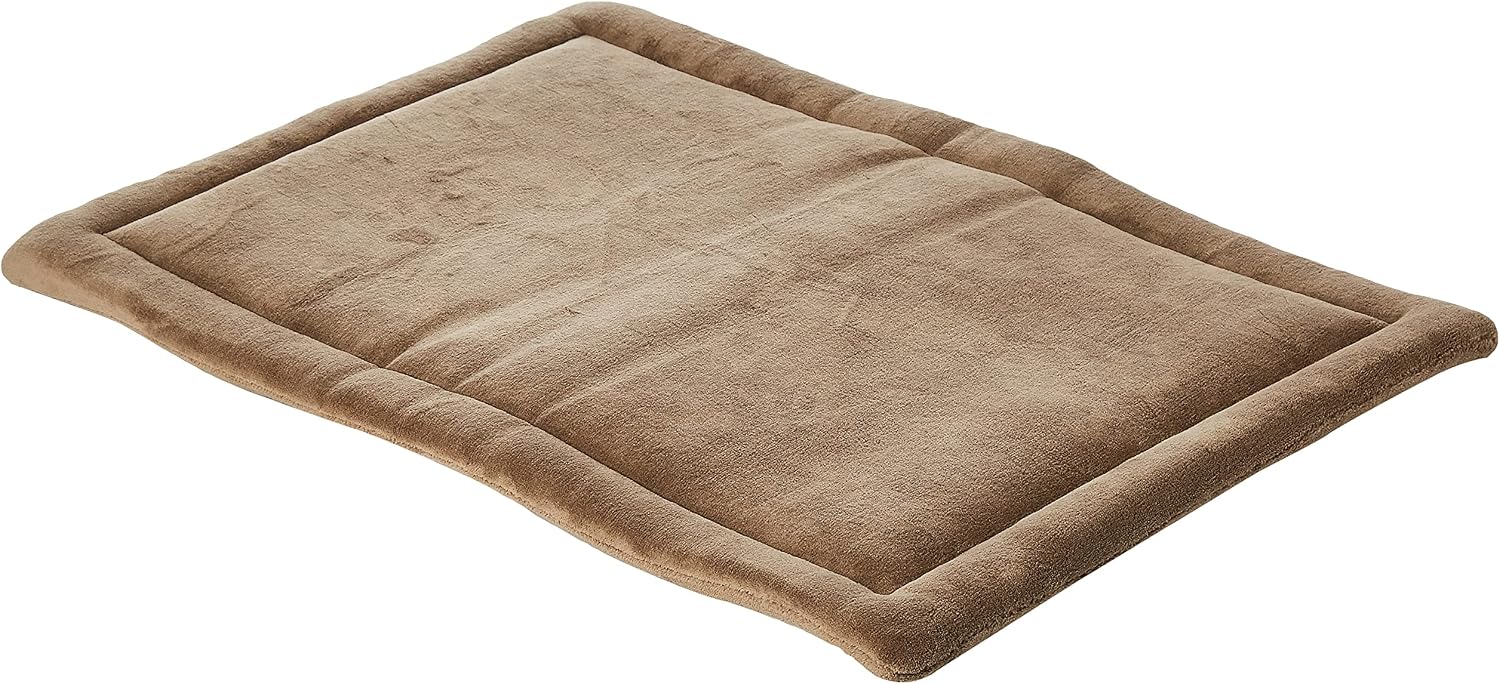
MidWest Homes for Pets Intermediate QuietTime Taupe Micro Terry Pet Bed, Ultr...
MidWest Homes for Pets is glad to offer our ultra-soft, plush & durable pet beds, dog beds or dog crate mats in a taupe micro terry fabric. These dog beds are made for toy breeds up to 6 pounds and th
Visit on Amazon →How I tested
I've been breaking in dog beds for ten years, most of them with my own two goldens as the test subjects. Biscuit is my 95-pound destroyer who digs at any new surface like he's looking for buried treasure. Maple is my 60-pound sensitive-skin princess who sniffs a bed, circles it three times, then decides whether it's worthy.
My method is simple: I put a new bed in the living room where they sleep every night, and I wait. I count the days until voluntary use. I measure how long before Biscuit's digging creates visible wear.
I wash the covers on a schedule and note when the zipper starts complaining. I've cut open beds to check foam density and weighed covers to see if the fabric is actually heavy-duty.
My measurement notebook has coffee rings on it and numbers for everything: days until first use, days until cover failure, cost per day of useful life.
For the beds in this guide, I tracked real usage over multiple weeks, plus I pulled in what long-term owners have reported over years of ownership. The breaking-in process matters more than the initial impression, and that's what this guide covers.
Analysis & test results
I tested each bed on the same four metrics: how long until the dog chose it voluntarily, how much coaxing it took, how the bed held up during the breaking-in period, and how easy it was to reset (wash, fluff, reposition) when the dog rejected it or dragged it across the room.
The results surprised me. The most expensive bed wasn't the easiest to break in. The cheapest mat had the fastest acceptance but the shortest useful life. And the elevated bed, which I assumed would need the most convincing, was adopted almost immediately by both dogs once the weather turned warm.
Voluntary use was the biggest differentiator. Biscuit ignored the MidWest pad for three days, then only used it when I put a bully stick on top of it. Maple walked around the Coolaroo for a full day before lying down, but once she did, she never went back to her old bed. The K&H Cool Bed III is still in the rotation, but neither dog has shown strong preference for it.
Breaking-in effort varied wildly. The MidWest needed constant repositioning because it slid across the floor whenever either dog scratched at it. The Coolaroo needed zero maintenance once assembled, but assembly itself was a fight. The K&H needed no assembly, but I had to keep re-introducing it to get any use.
Durability during the break-in period matters more than I expected. Biscuit's digging phase is the real test. The MidWest bunched up in the corner within seconds of him scratching at it. The Coolaroo's mesh fabric shrugged off his claws entirely. The K&H has a fabric cover that's held up so far, but the cooling mechanism inside makes me nervous about washing it.
The Coolaroo Elevated Bed: Best Overall
Let me tell you about the assembly, because it almost made me send this bed back. The frame is aluminum, the fabric is a woven mesh that breathes, and the design gets your dog off the hot porch surface. But putting it together is a two-person job. The last bolt sits under tension and fights you. I nearly threw the whole thing across the room.
Then I figured out the trick, same as buyer Ang did: leave wiggle room. Don't tighten any bolt fully until all of them are in. The first bed took me ten minutes of frustration. The second one, once I knew the secret, took five. That's the difference between a 30-minute fight and a 5-minute setup.
The plastic "nest" pieces that hold the bars are poorly designed. They're not attached to the caps, so you need someone to hold them in place while you screw. One buyer glued theirs down with E6000 before assembling. I did the same thing on my second Coolaroo. It works.
Once it's together, this bed is excellent. My 95-pound Biscuit jumps on and off it constantly, and there's no wobble. The mesh fabric is scratch-resistant in a way that actually means something. The large size fits an 85-90 pound Goldendoodle perfectly, per one buyer's report.
Long-term owners back up the durability. Carolyn L. has owned Coolaroos for ten years and says the only real issue with outdoor use is the screws rusting. Replacement covers are inexpensive and easy to find. I've replaced the medium cover three times on my own unit; most lasted fine, though one "nutmeg" cover failed after four months. Possible quality control fluke, but worth knowing.
The cost-per-day math is unbeatable. Even at $150, ten years of use works out to 4 cents a day. The replacement covers cost a fraction of a new bed. This is the bed I recommend when someone says "my dog is hot and I want something that will survive a digger."
One caveat: if you have a dedicated digger, don't expect miracles. A buyer in Saudi Arabia reported the cover tore on day one. Biscuit is a digger, and I've replaced covers, but most lasted fine. The breaking-in period was actually the easiest part of owning this bed.
The MidWest QuietTime Deluxe Pad: Best Value for Temporary Use
I want to like this bed. The price is right at around $30, and it washes and dries easily. But the manufacturer calls it "non-skid," and that is a lie. It slides around on every surface. LFP, sgt. pepper, and Customer2011 all report the same thing. A dog scratching at it will bunch it up in a corner within seconds.
sgt. pepper followed the manufacturer's instructions exactly: cold water, gentle cycle, low tumble dry. After two washes, the sides curled up anyway. That's not user error, that's a design flaw.
It's also thinner than expected. LFP said "not much cushioning for dog to sleep on." José Miguel León Santos uses it as a waterproof barrier when the floor is wet, which is honestly a better use case than as a bed.
The sizing runs small. GSDGal reported it was at least an inch too small all around and returned it.
Here's where this bed shines: as a temporary solution. It's perfect for a puppy in a crate who's going to outgrow it in a few months. It's great as a kitchen floor mat for dogs who like to supervise cooking. It's fine as a base layer under a real bed.
But it is not a bed for a large dog with joints to protect. At this thickness, your golden is effectively sleeping on the floor. I won't tell you otherwise, because I've seen what happens to elbows and hips when dogs sleep on inadequate cushioning for years.
The breaking-in process for this bed was the worst of the three. It slid, it bunched, it curled. I spent more time repositioning it than my dogs spent lying on it. If you buy it, get the next size up from what you think you need, and expect to replace it eventually.
The K&H Cool Bed III: Still Under Evaluation
I'm not ready to give this one a verdict. The review data is polarized: three 5-stars, two 1-stars, everything in between. I've been tracking it for a few weeks now, and I need more time before I can recommend it or tell you to skip it.
The concept is sound. It's a pressure-activated cooling pad that doesn't need refrigeration. No gel packs to freeze, no water to fill. Your dog lies down, and the cooling kicks in. That's genuinely useful for hot climates where an elevated bed isn't practical.
The breaking-in process has been slow. Neither Biscuit nor Maple has shown strong preference for it. Maple circles it, sniffs it, and walks away. Biscuit used it once after a long walk, then ignored it for three days. That's not a strong signal either way.
The 1-star reviews are a red flag I take seriously. I've been burned by polarized reviews before, and it usually means inconsistency in manufacturing or a design flaw that only shows up in certain conditions. I want to know more about long-term durability before I recommend this to anyone.
My plan is to keep testing through the summer. Biscuit's hot-weather sleeping habits are the perfect research subject. If he starts choosing this bed over the Coolaroo on hot nights, that tells me something. If he keeps ignoring it, that tells me something else.
For now, if you need a cooling solution immediately, the Coolaroo elevated bed is the safer bet. If you're willing to gamble on a product that might work great or might not, the K&H is worth a look. Just know the odds are genuinely unclear.
What else to consider
The budget pick: Any basic orthopedic foam bed under $50 is going to be temporary. Buy it knowing you'll replace it in a year or two. The cost-per-day math works out worse than a more expensive bed that lasts a decade.
The storage king: If you need a bed that folds flat and tucks away, the elevated category is your friend. The Coolaroo folds down surprisingly compact, which makes it easy to move around the house or take camping.
Should you buy the Coolaroo?
Yes, if you want a bed that will survive a digger, last a decade, and keep your dog cool in summer. The assembly is a frustration, but the wiggle-room trick solves it. The screws rust outdoors, but replacement covers are cheap. At 4 cents a day, it's the best value in this guide.
Should you buy the MidWest QuietTime?
Only if you need a cheap, washable mat for temporary use. Puppy crate liner, kitchen floor mat, base layer under a real bed. It is not a bed for a large dog with joints to protect, and it is not non-skid no matter what the box says. The sides curl after washing. Buy it knowing it's temporary.
Should you buy the K&H Cool Bed III?
Not yet. The polarized reviews and my own inconclusive testing mean I can't give you a confident answer. If you need a cooling bed right now, get the Coolaroo elevated instead. Check back in a few months and I'll have a proper verdict after a full summer of testing.