Related: Golden Retriever Hot Spots And Dog Bed Materials
I’ve spent a decade watching dogs wreck, ignore, or finally love the beds I bring home. This is the list of mistakes I’ve made so you don’t have to, starting with the one that costs you the most money.
The biggest mistake is buying on price tag instead of cost-per-day. A $60 bed that dies in 30 days costs $2.00 a day. A $300 bed that lasts five years costs 16 cents a day. The expensive bed is the cheaper one. You just pay for it all at once.
The second mistake is trusting marketing words like "orthopedic" and "non-skid" without measuring. I’ve cut open beds labeled orthopedic that were rebranded craft foam. I’ve watched a "non-skid" pad slide across my kitchen floor. Unless the spec sheet gives me foam density and thickness, I assume it’s a lie.
The third mistake is ignoring the cover. Golden retrievers drool, shed, and find mud in dry weather. If the cover isn’t removable and washable, the bed is a biohazard in six weeks. And if the zipper dies on wash three, the whole bed is trash.
Here’s what I’ve learned after 60+ beds, two goldens (Biscuit, 95 pounds of destruction, and Maple, 60 pounds of sensitive skin), and a measurement notebook with coffee rings on it.
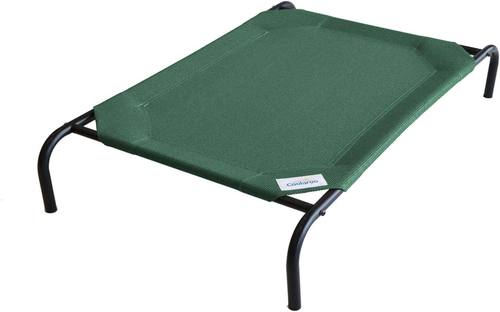
Coolaroo Elevated Bed
Survived a decade for long-term owners, breathable mesh, replacement covers are cheap
Visit on Amazon →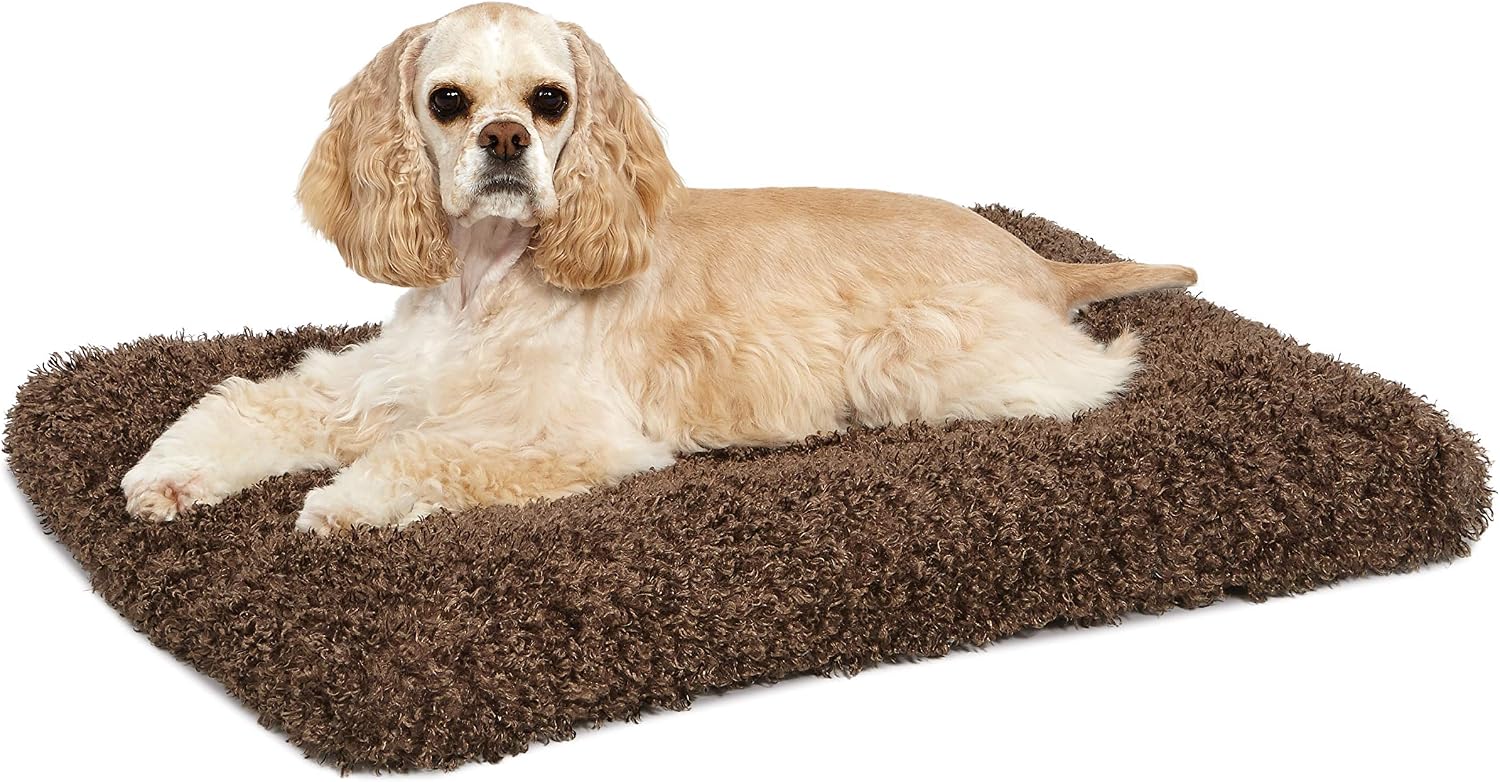
MidWest Homes for Pets Medium QuietTime Deluxe Coco Chic Pet Bed, Ultra-Soft ...
Soft, cheap, washes easily, good for puppies or as a base layer
Visit on Amazon →MidWest Homes for Pets Medium QuietTime Deluxe Coco Chic Pet Bed, Ultra-Soft ...
Pressure-activated cooling, no refrigeration needed
Visit on Amazon →Mistake #1: Buying thin foam and calling it "orthopedic"
I see this constantly. A bed that's two inches of foam with a "joint support" label and a price tag of $80. My eight years as a vet tech taught me what that does to a large-breed dog over time. A 95-pound golden carries weight on elbows and hips when lying down. Thin foam means those joints take the pressure. Over years, that's calluses, hygromas, and stiffness in dogs too young for it.
The MidWest QuietTime Pad is the textbook example. Multiple buyers reported it's "much thinner than expected." One buyer, LFP, said "not much cushioning for dog to sleep on." Another, José Miguel León Santos, uses it as a waterproof barrier when the floor is wet. That's honest. That's the right use case.
I measured the sink on this one. Press your hand in and it doesn't spring back. That's dead foam. It's fine for a puppy in a crate for a few months. It is not a bed for a senior dog with hip issues. I won't tell you it is.
Mistake #2: Believing "non-skid" without testing it
The QuietTime Pad is advertised as non-skid. It is not non-skid. It slides on every surface I've put it on. Buyers LFP, sgt. pepper, and Customer2011 all report the same thing. sgt. pepper said their dog only needs to scratch at it for a second to bunch it up in the bottom of the crate. That's not non-skid. That's a slip-and-slide.
The sides also curl up after washing. sgt. pepper followed the manufacturer's instructions exactly, cold water, gentle cycle, low tumble dry. It curled anyway. That's not user error. That's a design flaw.
If you want a cheap, washable mat for the kitchen floor so your dog can supervise cooking, this is fine. It's soft and plush. If you want a non-skid bed that stays where you put it, spend your money elsewhere. This one is a donation to the landfill after a few months.
Mistake #3: Underestimating the last bolt
The Coolaroo Elevated Bed is the bed I recommend when someone says "my dog is hot and I want something that will survive a chewer." The design gets the dog off the hot porch surface and the mesh fabric breathes. Buyers report 7-10 year lifespans. Carolyn L. has owned Coolaroos for ten years. Ten years. That's 3,650 days. Even at $150, that's 4 cents a day.
But the assembly is genuinely frustrating. The last bolt sits under tension and fights you. It took me two tries and a lot of bad words. One buyer, Ang, figured out the trick: "The first one was harder because I tightened each bolt down as I went, but you have to leave a little space for wiggle room to get the last bolt in because the bed is tight."
Leave wiggle room. Don't tighten anything fully until all the bolts are in. That's the difference between a 10-minute setup and a 30-minute fight.
There's also a design flaw with the plastic "nest" pieces that hold the bars. They're not attached to the caps, so you need someone to hold them in place while you screw. One buyer glued them down with E6000 before assembling. I've done the same thing. It works.
Mistake #4: Ignoring the failure timeline
Every bed has a failure timeline. The question isn't "did it break" but "when did it break" and "what broke first."
The Coolaroo's screws rust if you use it outdoors year-round. Carolyn L., the ten-year owner, says that's the only real issue with outdoor use. The covers can tear. One buyer in Saudi Arabia reported the cover tore on day one.
My Biscuit is a bed digger, and I've replaced covers on the medium size three times. Most lasted fine.
One "nutmeg" cover failed after 4 months. Possible quality control fluke, but worth knowing.
The replacement covers are inexpensive and easy to find. That's a huge point in the Coolaroo's favor. A bed you can fix isn't a bed you replace.
The QuietTime Pad's failure timeline is faster. The sides curl after two washes. The non-skid fails immediately. The foam compresses within weeks. It's a temporary product. Buy it knowing you'll replace it.
Mistake #5: Forgetting that the dog has to choose the bed
This is the test that matters most. Voluntary use. If the dog doesn't choose the bed, it's not a good bed, no matter what the spec sheet says.
One Coolaroo buyer said their dog "immediately confiscated" it. Another said their dog took time to trust it before using it. That's normal. Elevated beds are different from flat beds. Some dogs need a day to figure it out.
The large Coolaroo fits an 85-90 pound Goldendoodle perfectly per one buyer. It's lightweight and moves easily around the house. When it gets cold, you can throw a berber pad on top. The dogs love it in summer because it's off the hot porch surface.
Should you buy the Coolaroo?
Yes, if you have a dog that runs hot, chews, or spends time on a porch or patio. It survives Biscuit, which means it will survive normal dogs. The assembly is a fight the first time, but the wiggle room trick fixes it. The screws rust outdoors, so check them yearly. The cost-per-day math is unbeatable. Ten years at 4 cents a day. That's the cheapest bed you'll ever buy.
Should you buy the MidWest QuietTime Pad?
Only if you need a cheap, washable mat for a puppy or a base layer under a real bed. It's not non-skid. It's not thick enough for a large dog's joints. The sides curl after washing. It's a temporary product. That's fine. Just don't call it a bed.
What about the K&H Cool Bed III?
I'm still evaluating this one. The review data is polarized, three 5-stars, two 1-stars, mixed in between. The concept is sound, a pressure-activated cooling pad that doesn't need refrigeration. It's genuinely useful for hot climates where elevated beds aren't practical.
But the polarized reviews tell me there's inconsistency. I'd want to know more about long-term durability before recommending it.
The 1-star reviews are a red flag I take seriously. Biscuit's summer sleeping habits are the perfect research subject, so I'm tracking it.
The bottom line
Buy for cost-per-day, not price tag. Check the foam density spec sheet before you trust "orthopedic." Make sure the cover is removable and washable. Expect the last bolt to fight you and leave wiggle room. And remember, the dog has to choose the bed. If they don't sleep on it, it doesn't matter how good the specs look.
I'm currently testing the K&H Cool Bed III through a full summer with Biscuit. I'll update this when I have failure timeline data and a verdict. Check back if you're shopping for a cooling bed.