A golden retriever dog bed is a foam problem before it is a shopping problem. A 90-pound dog drops concentrated load on the foam under his hips and elbows every night for eight hours, and cheap foam does not recover from that. It compresses, it stops springing back, and six months later you are looking at a pancake with a nice cover on it.
I have two goldens. Biscuit is 95 pounds, six years old, and has destroyed things I paid real money for. Maple is 60 pounds, three years old, and has skin that reacts to everything. Between the two of them I have learned that buying the bed is maybe 40 percent of the job. The other 60 percent is setup and maintenance, and that part is free.
This is how I choose, set up, and monitor a bed for a golden, plus the two beds I would point a budget-minded owner toward right now.
Why you should trust me
I spent eight years as a vet tech before I started writing about dog gear full time. That job taught me to look at a golden retriever's hips and elbows as a patient's joints, not as accessories. I am not a veterinarian and I will not hand out medical advice, but I know what a dog with a bad hip looks like when he is trying to get comfortable, and I know that the bed is the cheapest thing you can change.
I keep a notebook. Every bed that comes into this house gets its foam measured the day it arrives and again six months later, its cover washed on a schedule, its weight logged before and after that wash, and its zipper inspected. I have put a ruler to more than 60 beds in ten years. The beds I recommend are the ones that survived the ruler, not the ones with the best photos.
How I picked and how I tested
Every bed goes through the same sequence here. Unbox, let the foam expand, measure the uncompressed thickness at four points, lie on it and measure the sink, wash the cover, weigh it again, then hand it to Biscuit and see what is left after a month.
The two beds below sit in the budget tier. I am going to be straight with you about what that means, because a lot of sites will not be. A budget bed is not a 300-dollar bed with a discount. It is a lighter foam, a thinner profile, and a shorter service life. What it can be is a genuinely good choice for a puppy, for a senior who needs a low bed to step onto, for a second sleep spot in the room where you actually spend your evenings, or for an owner who needs a washable cover more than they need ten-year foam.
Here is the test that matters most: would a 95-pound golden turn it into a pancake in four months? For the beds below, the honest answer is that they are not built for that job. They are built for the jobs I just listed, and they do those jobs well for the money.
What a golden retriever actually needs from a bed
Four things, and marketing words are not one of them.
Foam density. This is the number that decides everything. Three to four pounds per cubic foot is real orthopedic foam. One and a half to two pounds per cubic foot is packaging foam with a nice cover. If the listing does not state density, assume the low end, because brands that use good foam brag about it.
Thickness. Two inches of foam is not orthopedic. It is a mat with big letters on the box. A real orthopedic bed for a dog over 80 pounds needs four inches minimum, and six is better for a senior with elbow issues.
A cover that comes off and goes in the machine. This is a deal-breaker in my house. Can't wash it, won't buy it. A golden sheds, drools, and rolls in things, and a bed cover that has to be spot-cleaned with a rag is a bed that will smell within a season.
Waterproof, done properly. I want a removable cover over a liner, not a coating baked into the fabric, because coatings are exactly what delaminate after one wash cycle. Ask what the waterproof layer actually is before you order.
Size comes after all four of those. Measure your dog nose to tail while he is sprawled out, not curled up, because that is the position he will actually sleep in.
The two beds I would buy in the budget tier
Both of these are budget beds, and both are honest about what they are.
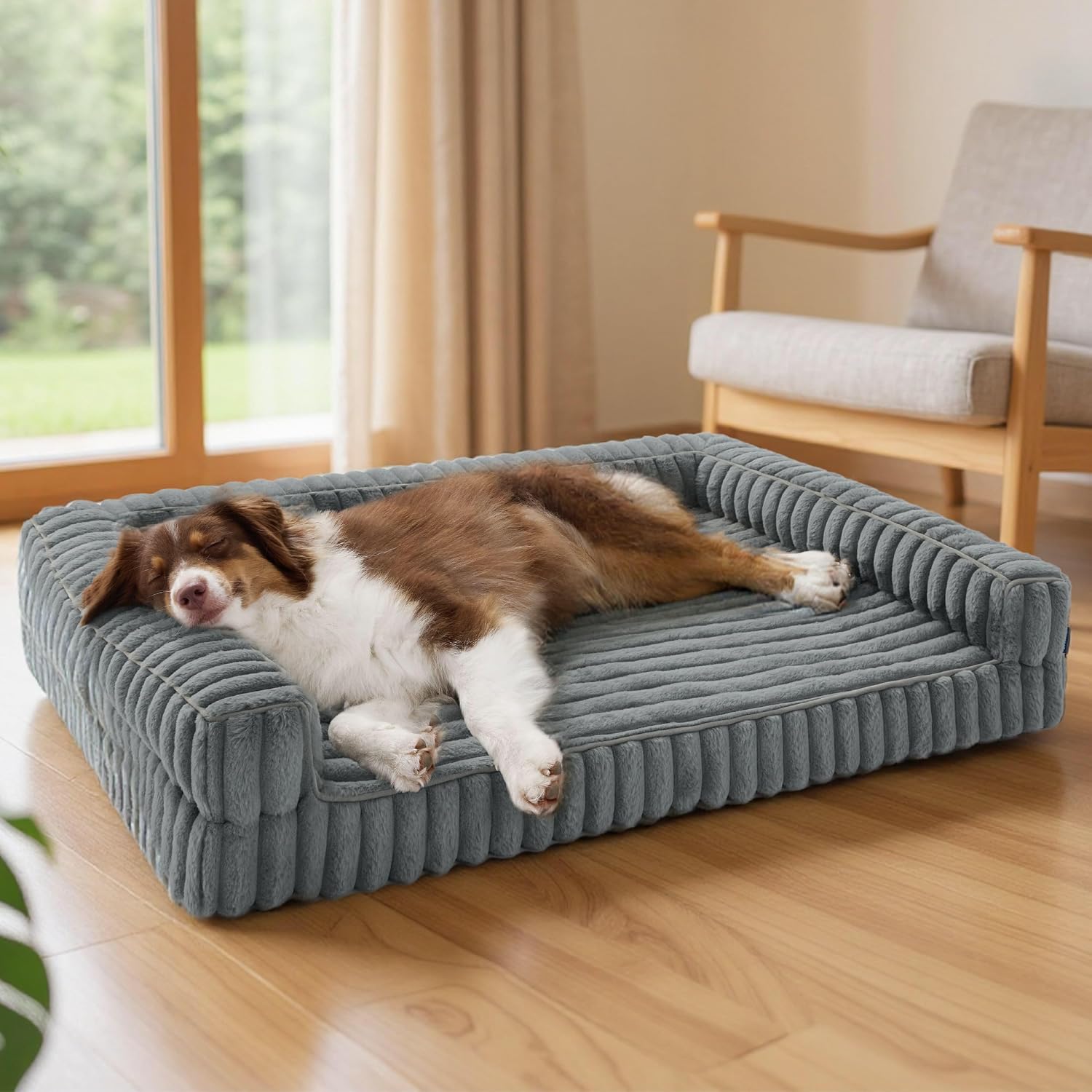
Best value: Bedsure ComfyFleece® Memory Foam Orthopedic Dog Beds Large Sized Dog 35"
 Visit on Amazon →
Check current Amazon price. This is the bed I would hand to an owner who wants memory foam without spending memory foam money.
The 35-inch footprint is a curl-up size. Maple, at 60 pounds, sleeps in a tight circle and fits it with room left over. Biscuit, at 95 pounds, sleeps stretched out with his chin on the floor, and he would hang off the end of it. That is not a knock on the bed. It is a size decision, and you have to make it honestly instead of buying the footprint you wish your dog used.
The fleece cover is the part that earns its place on this list. A removable, machine-washable cover at this tier is what separates a bed from a donation to the landfill, and it is the first thing I check before anything else.
Flaws but not dealbreakers: Treat the word orthopedic on the box as a claim to verify, not a spec. At this tier you are buying comfort and washability, not ten-year joint support. Plan on replacing it sooner than you would a bed built around dense foam, and check the sink with a ruler at six months so you are not guessing.
Anyone with a puppy, a smaller golden, or a dog who sleeps curled tight will get real value here.
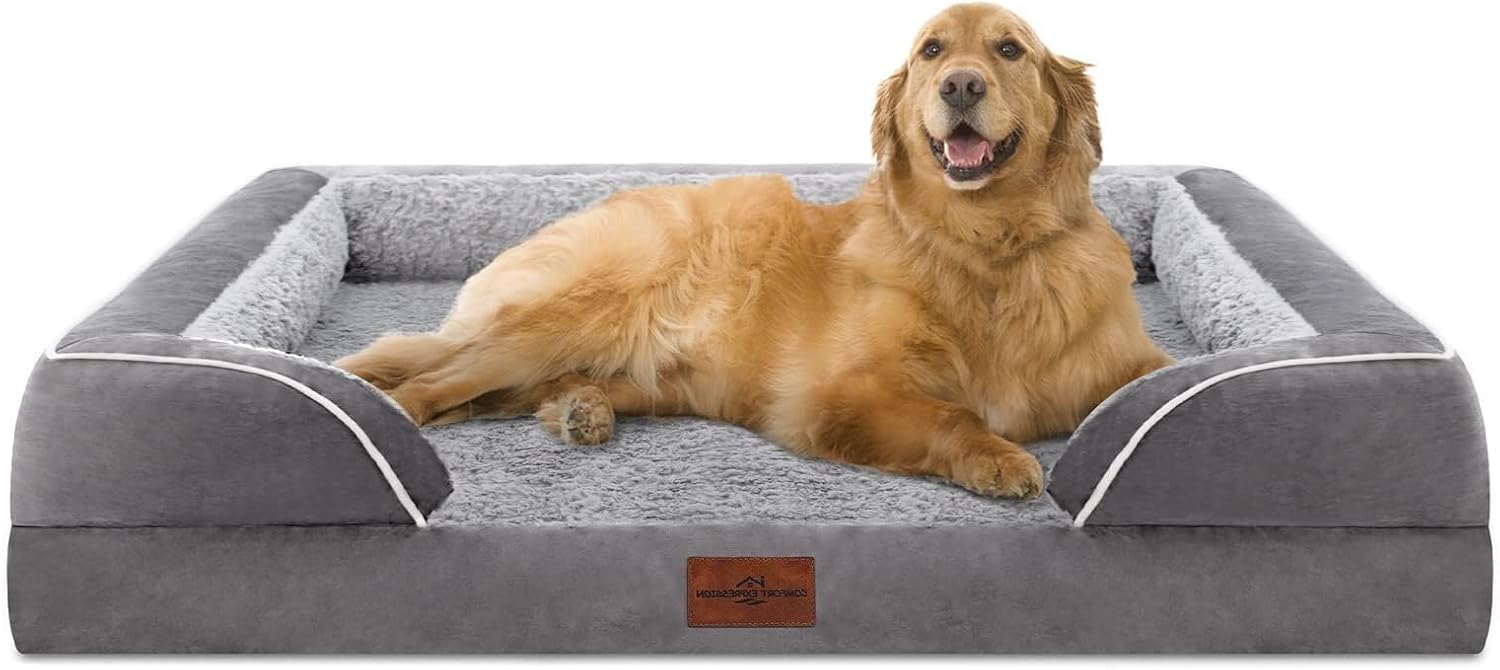
Best waterproof cover: Comfort Expression Waterproof Orthopedic Dog Bed for Extra Large Dogs
 Visit on Amazon →
Check current Amazon price. This one is on the list for two reasons: it comes in an extra-large footprint, and the cover is built around a waterproof claim.
Waterproof matters most for the two dogs who genuinely need it. The senior with occasional leaks, and the puppy who is not reliable yet. In both cases the bed is going to get washed often, which is why I test any waterproof claim the same way: does it survive a wash cycle and still shed liquid, or does it turn into a sponge with a peeling backing? Look for a removable cover with a separate liner underneath. That construction survives washing. A coating does not.
The extra-large footprint is the other reason to look here. If your golden sprawls flat, this is the size class that gives him a full-length landing instead of a bed he drapes over.
Flaws but not dealbreakers: Extra large means extra floor space. Measure the corner you have in mind before you order, because a bed that blocks a doorway gets shoved into a back room and never used. And the same budget-tier caveat applies: expect to replace it before you would replace a dense-foam bed.
Anyone with a senior golden, a puppy, or a big sprawler who needs a wipe-clean surface should start here.
How to set up the bed so it lasts
The setup is where most owners lose a year of bed life. None of this costs anything.
Let the foam expand. Memory foam ships compressed. Give it 24 to 48 hours in a warm room, out of the box and out of the plastic, before the dog gets on it. If you let Biscuit flop on it an hour after unboxing, you have permanently compressed foam that never finished expanding.
Wash the cover before the first use. Manufacturing residue and shipping smell come out in one cold, gentle cycle. Air dry or tumble low. Never put a waterproof liner in a hot dryer, because heat is what kills the membrane.
Put it on a firm, flat surface. Foam needs a base. Carpet is fine. A slatted floor, a sagging sofa cushion, or a spot over a floor vent is not. A vent underneath a bed also blows dust straight into the foam, which is a smell problem you will not figure out for months.
Put it where your dog already chooses to lie. Goldens want to be in the room with you. A beautiful bed in a back bedroom goes unused, and an unused bed never gets tested by real weight. Watch where he drops for a week, then put the bed there.
Run the sink test on day one. Lie on the bed, put a ruler against the side, and measure how far the foam compresses under your weight. Write the number and the date in a notebook. That is your baseline. Without a baseline you are arguing with your memory six months from now, and your memory will lose.
Set a wash schedule and keep it. Every two weeks for a shedding golden, cold water, gentle cycle, cover only. This is also your inspection appointment. Look at the seams, the zipper, and the foam while the cover is off.
Rotate the foam every two to three months. Dogs sleep in the same spot on the same side every night. Flipping and rotating spreads that load and buys you months.
Watch the zipper, not the cover. Zippers fail before fabric does. If it starts catching, fix it early with a zipper lubricant or a replacement pull, because a broken zipper turns a washable bed into a bed you have to throw away.
How to tell when a bed is finished
Foam failure is measurable, which means you do not have to guess.
Run the sink test again at six months and compare it to your day-one number. If the sink depth has grown by more than about half an inch on a 90-pound dog, the foam is giving up and the bed is on its way out. If the sink is deeper than two inches, it is a pancake. A pancake is not repairable, no matter what a foam topper costs. Zippers are repairable. Covers are patchable. Flattened foam is not.
The other signal is behavioral and it is easy to miss. A golden who suddenly prefers the floor, or who shifts positions every twenty minutes, is often telling you the bed stopped supporting him. Dogs do not complain. They relocate.
Be realistic about service life at the budget tier. If you own a 90-pound dog and you paid budget money, plan on this being a one-to-two-year bed, not a five-year bed. That is a fair trade, as long as you know it going in.
What I left off this list
Donut beds. A 90-pound golden turns one into a pancake with a rim, and the rim does nothing except collect hair.
Cooling gel beds. They work in a Colorado summer, but cheap gel bladders burst, and then you are cleaning gel out of carpet. If you want cooling, buy a bed with a breathable cover and a washable mat on top, not a sealed gel pack.
Anything marketed as orthopedic with two inches of foam. That is not a bed for a large dog, that is a mat with big letters on the box.
Covers that cannot be removed. I do not care how good the fabric is. If it cannot go in the machine, it will smell in a season.
What this all costs
Cost per day is the only honest price comparison, and it is simple division. Take what you paid and divide it by the number of days the bed actually lasted. A bed that costs twice as much and lasts three times as long is the cheaper bed. You just pay for it all at once instead of three times in a row.
The two beds above are in the budget tier, which means you should expect a shorter service life than a dense-foam bed with a real warranty behind it. For a puppy who is going to chew the corner off anyway, that math works in your favor. For a six-year-old golden with elbows that click when he stands up, I would rather you put that money toward a bed with four inches of dense foam and a cover you can wash.
Either way, the setup is free and it is where the money is actually saved. Expand the foam, wash the cover, put it where the dog already sleeps, run the sink test on day one, and write the number down. Do that and you will know exactly when the bed is done instead of guessing. Your golden will tell you the rest.